Source Classic Spruce Acoustic Guitar for Beginners, Professionals, Unisex
Compare 30 listings of Classic Spruce Acoustic Guitar options featuring mahogany, rosewood, and poplar bodies with 22 or 20 frets. Buyers can evaluate customization, packing, and origin details from China suppliers.
Key considerations
Products List


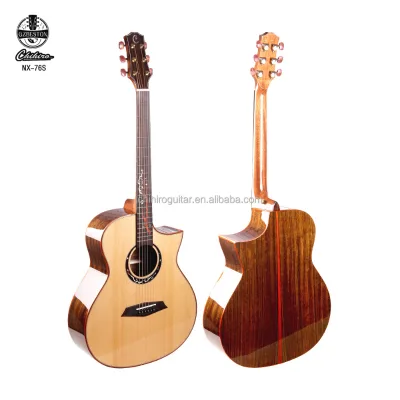
Grade a Spruce Top All Solid Acoustic Guitar for Professional Guitar Player
$163.00 - $230.00
MOQ: 6 Pieces


Comprehensive Sourcing Guide
Strategic Sourcing Guide for Classic Spruce Acoustic Guitars
The global market for classic spruce acoustic guitars presents a complex landscape for B2B procurement professionals. Sourcing these instruments requires a nuanced understanding of material science, manufacturing variability, and supply chain logistics. Unlike mass-produced electric guitars, acoustic instruments rely heavily on the acoustic properties of tonewoods, specifically the topboard, which dictates the instrument's resonance and projection. This guide provides a disciplined framework for evaluating suppliers, verifying technical specifications, and managing procurement risks for buyers seeking high-quality classic spruce acoustic guitars.
Material Composition and Tonal Characteristics
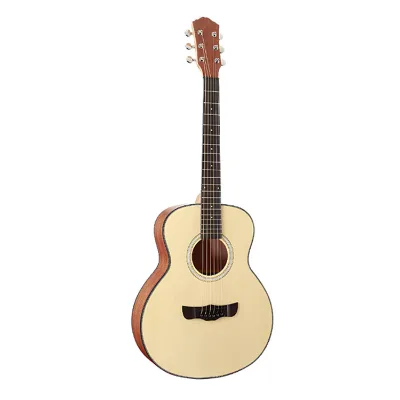
The primary differentiator in the acoustic guitar market is the wood selection. For a "classic spruce" instrument, the topboard is the critical component. In the observed product data, specific listings identify the topboard as "A Grade Spruce" or "Solid Spruce," while others note "Platane Wood" (Plane) or generic "Spruce." The distinction between solid wood and laminated wood is paramount. Solid spruce tops generally offer superior tonal evolution and resonance over time, whereas laminated tops provide durability but less dynamic range.
The back and sides materials further define the instrument's character. The supplied data reveals a wide variance in materials, including "Rosewood," "Mahogany," "Poplar," and "Tiger-Okoume." Rosewood is traditionally associated with deep bass and complex overtones, while Mahogany offers a focused mid-range and quick attack. Poplar and Tiger-Okoume are often used in entry-level or mid-range models to reduce costs while maintaining structural integrity. Buyers must verify the specific wood species for the back and sides, as this directly impacts the final price and tonal profile. Additionally, the neck material, observed as "Maple" in some listings, influences the instrument's stability and sustain.
Technical Specifications and Dimensional Standards
Precision in manufacturing is essential for playability and consistency. The supplied product attributes highlight several key specifications that buyers should prioritize during the evaluation process. The body style is frequently identified as "Om Body" or "Om-45 Type," which refers to the Orchestra Model—a popular shape known for balanced tone and comfortable playability. The physical dimensions are critical; one observed standard lists a size of "40 inches," while another specifies a model number "L-320-39(N/YN)," suggesting variations in scale length and body depth.
The nut width is a crucial specification for classical and fingerstyle players. The data indicates a nut width of "45mm," which is standard for many classical and nylon-string instruments, providing a comfortable spacing for fingerpicking. The fret count also varies, with observations of "22" and "20" frets. Buyers must confirm the exact number of frets and the scale length, as these affect the instrument's intonation and the reach required for different playing styles. Furthermore, the hardware, such as "High Grade Open" machine heads and "Closed Knob" string winders, impacts tuning stability. The origin of these components, noted as "Imported From Korea" in some listings, suggests a potential quality benchmark that buyers should verify for each specific SKU.
Pricing Dynamics and Minimum Order Quantities
The cost structure for acoustic guitars is driven by material quality, labor intensity, and order volume. The observed price range for these instruments spans from $28 to $550.68 USD. This significant variance reflects the difference between entry-level models using laminated woods and poplar backs, and premium instruments featuring solid spruce tops and rosewood backs. The lower end of the spectrum likely corresponds to instruments with "Platane Wood" tops and sides, while the higher end aligns with "A Grade Spruce" and "Rosewood" configurations.
Minimum Order Quantities (MOQ) are another critical financial factor. The data shows an MOQ range from 1 to 120 units. Some suppliers offer an MOQ of 6 pieces for stock items, while others require 180 pieces for OEM (Original Equipment Manufacturer) custom orders. This distinction is vital for buyers deciding between purchasing off-the-shelf inventory versus developing a private label brand. The "Supply Ability" is noted as 5,000 pieces per week for certain suppliers, indicating a capacity for large-scale orders, but buyers must confirm if this capacity is available for custom specifications. Understanding the relationship between price, MOQ, and customization is essential for budgeting and cash flow management.
Customization and Branding Capabilities
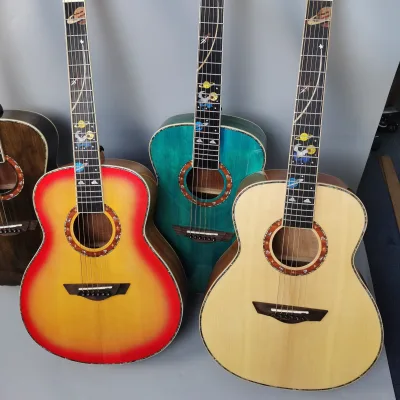
For B2B buyers looking to establish a brand, the supplier's ability to handle customization is a key decision factor. The product data explicitly states that "Customization" is available and that the supplier "Accepts OEM ODM." This capability allows buyers to specify unique features such as binding materials, color finishes, and hardware configurations. The observed "Abalone" binding and "Brazil Wood" bows suggest that suppliers can accommodate premium aesthetic requests.
The branding aspect is also evident, with some listings mentioning the "Deviser" brand, while others indicate that the supplier accepts OEM orders. Buyers should clarify the extent of customization allowed. Does the supplier offer custom headstock logos, inlay designs, or specific wood combinations? The "Service" attribute confirms that OEM and ODM are accepted, but the specific lead times and costs associated with these customizations must be negotiated. Additionally, the packaging options, ranging from "Double Strong Carton Box" to "EPE with Strong Box" and "Paper Box," should be aligned with the target market's expectations for product presentation and protection during transit.
Supplier Evaluation and Geographic Considerations
Geographic origin plays a significant role in the supply chain dynamics of musical instruments. The supplied data indicates that the products originate from "China," with specific mentions of "Guangdong, China." Guangdong is a major manufacturing hub for musical instruments, offering a mature ecosystem of suppliers, component manufacturers, and logistics providers. However, the specific location within China can influence labor costs, quality control standards, and shipping efficiency.
When evaluating suppliers, buyers should look beyond the basic origin data. The "Shipment Time" is noted as "1-3 Days" for stock items, which is an excellent indicator of a supplier's readiness and inventory management. However, for custom orders, this timeline will likely extend. Buyers must verify the actual lead times for production and shipping to their destination. The "Product Name" and "Application" fields, such as "Musical Instruments Guitar Classic Guitar for Sale" and "Guitar Lover," provide context on the target market, but buyers should ensure the supplier has experience exporting to their specific region. The presence of "High Grade Open" machine heads and "Imported From Korea" hardware suggests that some suppliers source premium components globally, which can be a positive indicator of quality focus.
Quality Control and Compliance Verification
Ensuring product quality and compliance is a non-negotiable aspect of B2B procurement. While the supplied data lists attributes like "A Grade Spruce" and "Solid Spruce," these are observations that must be verified through independent testing or strict supplier audits. Buyers should not assume that all products labeled with these terms meet the same quality standards. The "Standard" attributes listed, such as "1134512(cm)" and "1303525(cm)," refer to packaging dimensions rather than product performance standards. Buyers must request specific quality control documentation, including wood moisture content readings, fretwork precision, and finish durability tests.
Compliance with international safety and environmental standards is also critical. Although no specific certification numbers are provided in the data, buyers should verify that the supplier adheres to relevant regulations regarding wood sourcing (e.g., CITES for endangered species like certain rosewoods) and chemical usage in finishes. The "Package" attribute of "6PCS/CTN" indicates a standard packing unit, but buyers should confirm that the packaging meets the requirements for international shipping to prevent damage. Regular quality inspections, either on-site or via third-party agencies, are recommended to ensure that the "22" or "20" frets are properly installed and that the "45mm" nut width is consistent across the batch.
Long-Term Procurement and Supply Chain Resilience
Building a sustainable supply chain for acoustic guitars requires a focus on long-term relationships and risk mitigation. The "Supply Ability" of 5,000 pieces per week indicates a robust production capacity, but buyers should assess the supplier's ability to scale during peak seasons. The variability in MOQs, from 6 pieces for stock to 180 for OEM, suggests flexibility that can be leveraged for different business models. However, reliance on a single supplier for a significant portion of inventory can pose risks. Diversifying the supplier base and maintaining a buffer stock of critical components, such as machine heads and strings, can enhance supply chain resilience.
Furthermore, the "Service" attribute of accepting OEM/ODM implies a collaborative relationship. Buyers should engage suppliers early in the product development process to ensure that design specifications, such as the "Om-45 Type" body or specific wood combinations, are feasible and cost-effective. The "Application" for "Beginner, Professional Performance, Unisex" suggests a broad market appeal, but buyers should tailor their sourcing strategy to the specific segment they target. By focusing on technical verification, clear communication of customization needs, and rigorous quality control, buyers can secure a reliable supply of classic spruce acoustic guitars that meet both their commercial and artistic standards.
FAQs
What materials are used for the topboard of these guitars?
The topboard is typically made of A Grade Spruce or Solid Spruce. Some models may feature Platane Wood, but spruce is the standard for classic acoustic resonance and projection in this category.
Which body styles are available for these acoustic guitars?
The available body styles include Om Body and Om-45 Type configurations. These Orchestra Model shapes offer balanced tone and comfortable playability for both beginner and professional performance applications.
Can I customize the guitar with specific binding and hardware?
Yes, customization is available for features like Abalone binding and Brazil Wood bows. Suppliers accept OEM and ODM services, allowing buyers to specify unique aesthetic and hardware requirements for their brand.
What is the minimum order quantity for stock items?
The minimum order quantity for stock items starts at 6 pieces. For OEM custom orders, the MOQ is typically higher, often around 180 pieces, depending on the specific customization requirements.
How long does it take to ship stock orders?
Shipment time for stock items is typically 1 to 3 days. This rapid turnaround applies to ready-to-ship inventory, while custom orders will require additional production lead time based on the supplier's capacity.
Where are these guitars manufactured and what is the origin?
These guitars originate from China, with specific manufacturing hubs in Guangdong. The products are packed in strong cartons or paper boxes to ensure safe transit from the factory to the buyer.